


Aug. 10, 2026
Old North State Report – August 7, 2026
UPCOMING EVENTS
- August 31, 2026: Thinkers Lunch – Political Reporter Roundtable
- October 15, 2026: NC Professional Lobbyists Association Annual Meeting
- October 22, 2026: Association of Executives of North Carolina Fall Conference
- December 2, 2026: NC Chamber - Women Lead NC
- January 12, 2027: NC Chamber - Economic Forecast Forum
LEGISLATIVE NEWS
ELECTION BILLS ADVANCE; STEIN TO REJECT HOUSE BILL 958
North Carolina lawmakers have approved two election-related bills, House Bill 958 and House Bill 834, and sent them to Governor Josh Stein. Supporters say the measures would strengthen election integrity through tighter voter-roll maintenance, increased oversight of election administration, regular post-election audits, and procedural changes aimed at improving voter confidence in elections.
House Bill 958 would shorten the early voting period for primary elections from 17 days to 10 days and expand the use of federal and interstate databases to help identify deceased voters on registration rolls. House Bill 834 focuses on ballot processing, absentee-ballot delivery, and judicial review of State Board of Elections decisions, making a number of administrative and procedural changes to election operations.
The bills received different levels of support in the House. House Bill 834 passed with bipartisan support on a 74-35 vote, with 11 Democrats joining all Republicans in support and no Republicans voting against the measure. Of the two unaffiliated representatives, Representative Carla Cunningham voted in favor, while Representative Nasif Majeed was excused and absent.
By contrast, House Bill 958 (Election Law Changes) passed on a largely party-line 62-46 vote. All Democrats and unaffiliated lawmakers voting opposed the bill, making it the more controversial of the two election measures.
The most debated provision in House Bill 958 would allow challenges to absentee and early-voting ballots for up to three days after an election. Republicans argue the bill improves transparency, accountability, and election security, while Democrats contend it could encourage losing candidates to pursue large-scale ballot challenges after Election Day and create uncertainty around election outcomes.
Governor Stein has announced that he will veto House Bill 958, saying it would make voting harder, create unnecessary disruption in the election process, and invite attempts to overturn election results after votes have been cast. Republican leaders have said they may seek a veto override, but the vote margin suggests that would be difficult because Republicans would likely need support from at least one Democratic or unaffiliated legislator if all members are present.
The House adjourned on Wednesday and is not expected to reconvene for voting until after the November election, so none of the proposed changes would take effect for the upcoming election cycle.
The Center Square (Wooten) 8/5/26
BUDGET CORRECTIONS BILL ADVANCES IN GENERAL ASSEMBLY
North Carolina lawmakers have advanced House Bill 268, a budget corrections measure that makes a series of changes to the state's recently enacted $34 billion budget. While the bill contains many technical fixes and adjustments, it also includes several higher-profile spending and policy provisions.
Among the most notable changes is up to $65 million in funding for major sporting events, including support for the Military World Games in Charlotte and efforts to keep the Wyndham Championship golf tournament in Greensboro. Supporters argue the investments will boost tourism and economic development, while critics contend the money could be better directed toward priorities such as disaster recovery, food assistance, or legal services.
House Bill 268 also includes additional support for hospitals and childcare programs and restores some vacant state positions that had previously been targeted for elimination after agencies raised concerns about staffing needs. The bill further contains provisions affecting executive branch authority, including changes involving Gov. Josh Stein and Secretary of State Elaine Marshall.
The House approved the measure with bipartisan support after it had already cleared the Senate. The bill has been sent to Governor Stein for consideration.
WRAL News (Doran) August 4, 2026.
LAWMAKERS SEND WIDE-RANGING DEREGULATION BILL TO STEIN
The North Carolina General Assembly has sent Senate Bill 445, the Regulatory Reform Act of 2026, to Governor Josh Stein after bipartisan approval in both chambers. The House approved the final version 82-28, while the Senate previously passed it unanimously. Based on comments made by Stein at a recent Council of State meeting, supporters expect Governor Stein to sign the measure into law.
Senate Bill 445 includes a wide range of regulatory, housing, business, environmental, and public safety reforms. One of its most significant housing provisions would require larger municipalities outside the coastal region to allow at least one accessory dwelling unit (ADU) on single-family residential lots. The bill would also make it easier to convert previously developed commercial and industrial properties into housing developments, a change supporters say could help increase housing supply.
The legislation also creates portable benefit accounts for independent contractors and contains numerous changes aimed at reducing regulatory requirements for businesses and local governments. Republican supporters argue the measure removes unnecessary barriers to economic growth, housing development, and entrepreneurship.
Backers describe Senate Bill 445 as a broad effort to modernize state regulations and encourage development, while critics have raised concerns about limiting local government authority and weakening certain regulatory protections.
Carolina Journal (Pomeranz & Opeka) August 5, 2026.
A LOOK BACK AT NORTH CAROLINA’S 2026 LEGISLATIVE SESSION
Although 2026 was supposed to be a short legislative session, North Carolina lawmakers tackled a wide range of major issues, including the state budget, elections, public safety, and local government authority. The session also continued a long-term trend of passing fewer bills, with 54 measures becoming law as of early August.
One major theme was the ongoing tension between state and local control. Lawmakers approved numerous local bills affecting annexations, property tax reappraisals, tourism taxes, zoning decisions, parking requirements, and other municipal matters, reinforcing the legislature's strong influence over local governments.
The session also featured significant political power shifts. Several lawmakers who lost primary elections remained influential during the session, while Republican legislators approved measures transferring authority away from Democratic statewide officials, including Governor Josh Stein and Attorney General Jeff Jackson.
Election policy and public safety were among lawmakers' top priorities. Election legislation advanced this year includes proposals to shorten primary early voting, change ballot-processing rules, and modify voter registration procedures. Meanwhile, lawmakers also considered measures addressing gang crime, human trafficking, and involuntary commitment policies.
Several high-profile issues remain unresolved. Pending items include election legislation, a vetoed homeless camping bill, concealed carry legislation, and regulations for intoxicating hemp products, all of which could return for consideration later this year.
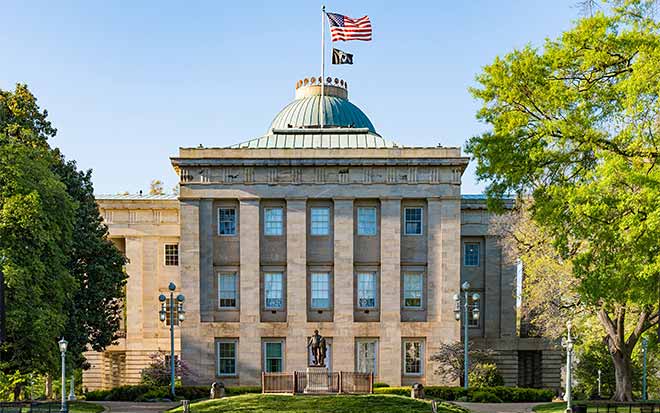
The North Carolina House of Representatives adjourned on Wednesday after two busy days of legislative activity, passing numerous bills and holding a special session in the historic State Capitol to commemorate the 250th anniversary of the United States. The House's adjournment followed the Senate's departure the previous week. Republican leaders in both chambers announced that neither the House nor Senate plans to hold voting sessions again until November, after the election.
Carolina Public Press (Michels) August 4, 2026.
The News & Observer (Vaughan) 8/5/26
LATEST POLLS
270 to Win: North Carolina Senate
RealClear Polling: North Carolina Senate- Whatley v. Cooper
WHAT WE’RE LISTENING TO
Tying It Together with Tim Boyum